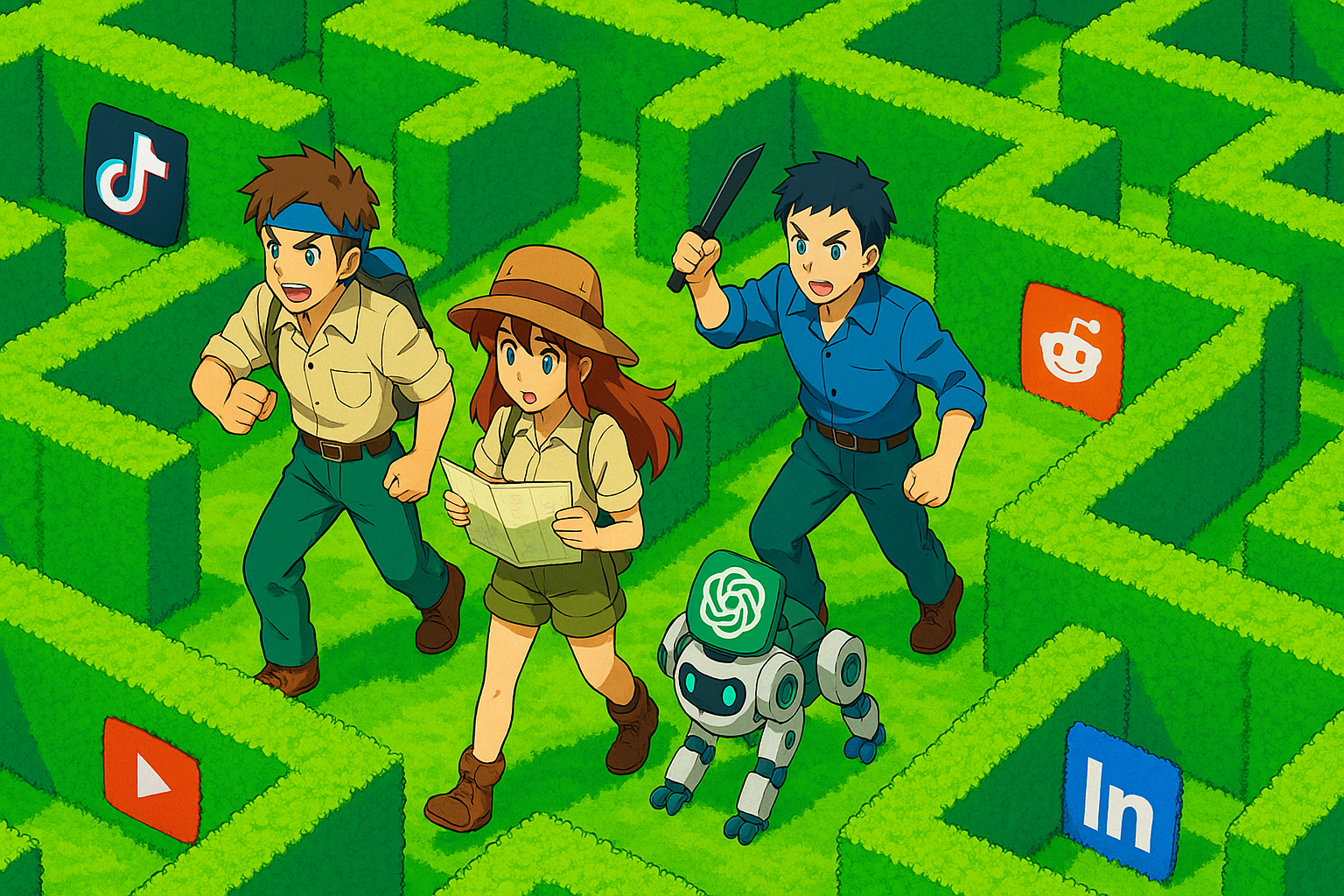
Search moved and your brand stayed put. Or, to put it into context, your brand is harder to find than ever.
At our agency, we are continually tracking search behavior data. We, among the other leaders in the space, are watching a pattern emerge that a large number of marketing teams, most likely, won’t have internalised yet. The numbers reveal something fundamental: Google's grip on search just broke (or, at least, the signs are there).
In the UK, Google's search dominance slipped to 93.35% in August 2025, down from its peak. Globally, it dropped below 90% for the first time in over a decade. That alone should trigger alarm bells.
But the real story sits in how people actually find information now.
The generational fracture
Research shows 74% of Gen Z use TikTok for search, with 51% preferring it over Google. The gap between traditional search and social discovery? Nearly non-existent for younger audiences.
In the UK specifically, 71% of TikTok's 25 million users are Gen Z, and they're using the platform as their primary search tool. These aren't entertainment platforms anymore. They're discovery engines.
The data gets more striking when you look at traffic impact. UK businesses experienced an 86% collapse in website traffic growth following Google's AI search rollout in August 2024. The algorithm didn't just change. The entire search ecosystem fragmented.
What's driving this
The shift isn't about Google failing. It's about audiences fragmenting their search behavior across platforms that serve different needs.
TikTok for visual how-to and product discovery. Reddit for community-validated recommendations. ChatGPT for conversational queries and synthesis. YouTube for deep-dive explanations. Traditional search engines for transactional intent.
Each platform operates as a distinct search engine with its own ranking factors, user expectations, and content formats. Your audience doesn't live on one platform anymore. They search everywhere.
The strategic implication
If your SEO strategy still centers on Google and Bing alone, you're optimising for a shrinking portion of search behavior. The marine sector marketing director searching for sustainability solutions might start on LinkedIn, validate on Reddit, and deep-dive on YouTube before ever touching Google.
The professional services CMO researching brand positioning might use ChatGPT for initial research, TikTok for trend validation, and traditional search only for vendor vetting.
This changes resource allocation completely. Equal SEO attention across platforms isn't experimental anymore. It's table stakes for visibility.
The brands who will be capturing attention into 2026 and beyond aren't the ones with the best Google rankings. They're the ones showing up wherever their audiences actually search. That requires integrated strategies across traditional search, social platforms, AI engines, and content hubs.
The question isn't whether to expand beyond Google. The data already answered that. The question is how quickly you can redistribute your SEO efforts before your competitors do.




No comments:
Post a Comment